
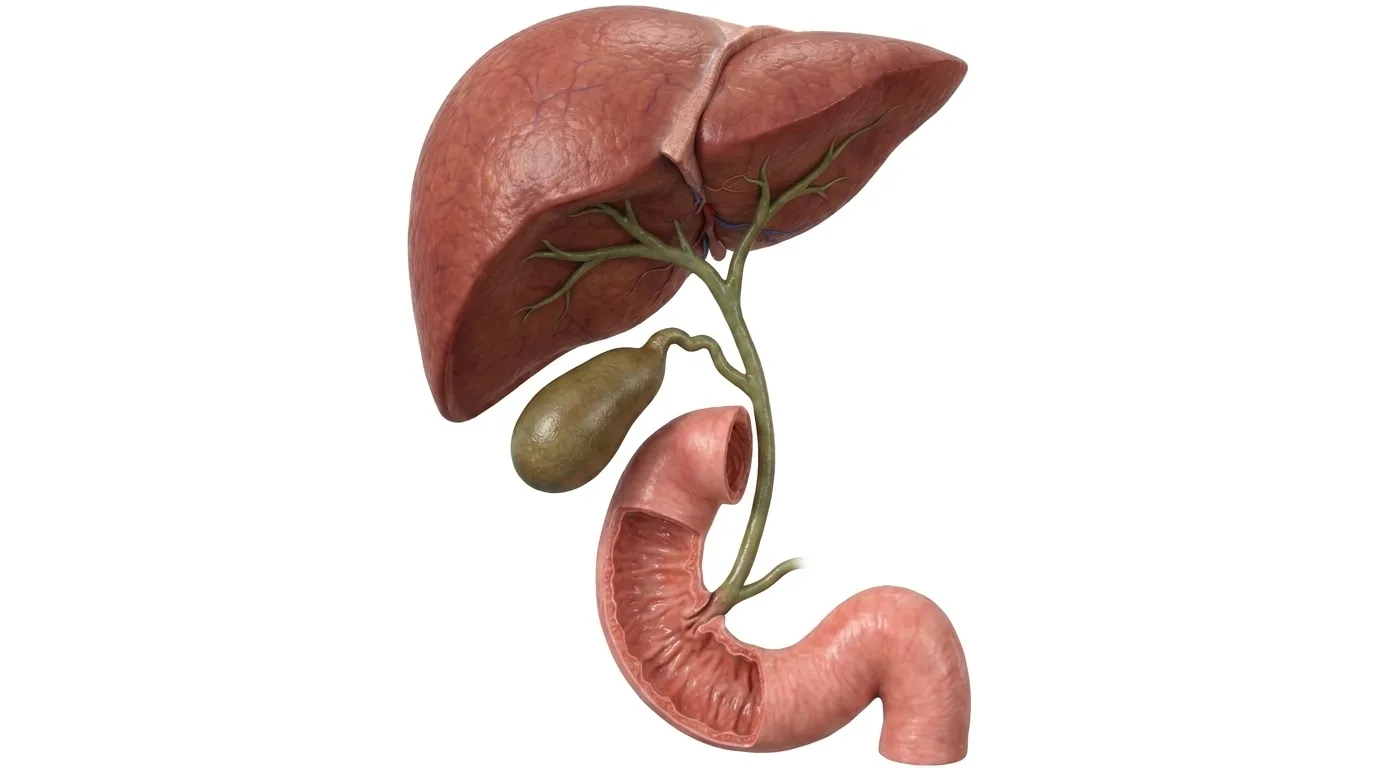
Biliary Tree
The biliary tree is the network of ducts that carries bile from the liver and gallbladder into the intestine. Stones can form or get stuck at different points along this tree — each with its own name and level of seriousness.
Cholelithiasis (Gallstones)
Hardened deposits that form inside the gallbladder itself, sometimes causing no symptoms for years — until they block the gallbladder's outlet and trigger sudden, severe pain, especially after fatty meals.
Choledocholithiasis (Bile Duct Stones)
Stones that form in, or move into, the main bile duct outside the liver (the common bile duct). This is more serious than simple gallstones, since a blocked duct stops bile from draining properly and often causes jaundice, dark urine, and fever.
Hepaticolithiasis (Stones Inside the Liver's Bile Ducts)
Stones that form inside the bile ducts within the liver itself. If left untreated, this can lead to repeated infections, liver abscess, shrinkage (atrophy) of part of the liver, and in long-standing cases, even cancer of the bile duct.
Symptoms
Dr. Golam Mahmud Rayhan's Approach
Gallstones are treated with laparoscopic (keyhole) cholecystectomy — minimally invasive removal of the gallbladder. Bile duct and intrahepatic stones are treated with laparoscopic choledocholithotomy and biliary reconstruction where needed.
Recovery
Gallbladder removal: most patients go home within 1-2 days and return to normal activity within a week. Bile duct stone surgery: hospital stay is typically 2-4 days depending on complexity.
Recurring abdominal pain or jaundice? Talk to Dr. Rayhan today.